

We will tell you when you do not need us
Some requirements are met with a straightforward internal fix. Where that is the case we say so, because the alternative is selling work that does not need doing.
// About CER
CER is a Singapore-based sustainability advisory and capability-building organisation working with businesses, financial institutions and public bodies across Asia.
// What we do
Organisations across Asia are being asked for things they were not previously asked for: emissions figures with an audit trail, climate risk assessed inside the risk framework, supplier data that can be passed on to a customer, financing structures whose sustainability terms will withstand challenge.
These requests arrive separately, from different parties, on different timetables. Each assumes measurement and governance that frequently does not exist yet.
CER exists to close that gap. We work on what an organisation is actually being asked for, establish what it would genuinely take to answer it, and then build that: the measurement, the process, the documentation and the internal ownership.
Where an organisation would be better served building the capability internally, CER Academy delivers the same technical material as training rather than as a retainer.
// The name
CER stands for Crystalise, Economise and Revitalise. It is a description of method rather than a slogan: understand the position clearly, decide where effort should go, then implement and embed.
It also connects to the carbon emissions reduction work that runs through much of what CER does.
The sequence matters. Organisations that begin with implementation before establishing what is material tend to build the wrong thing carefully.
How we work
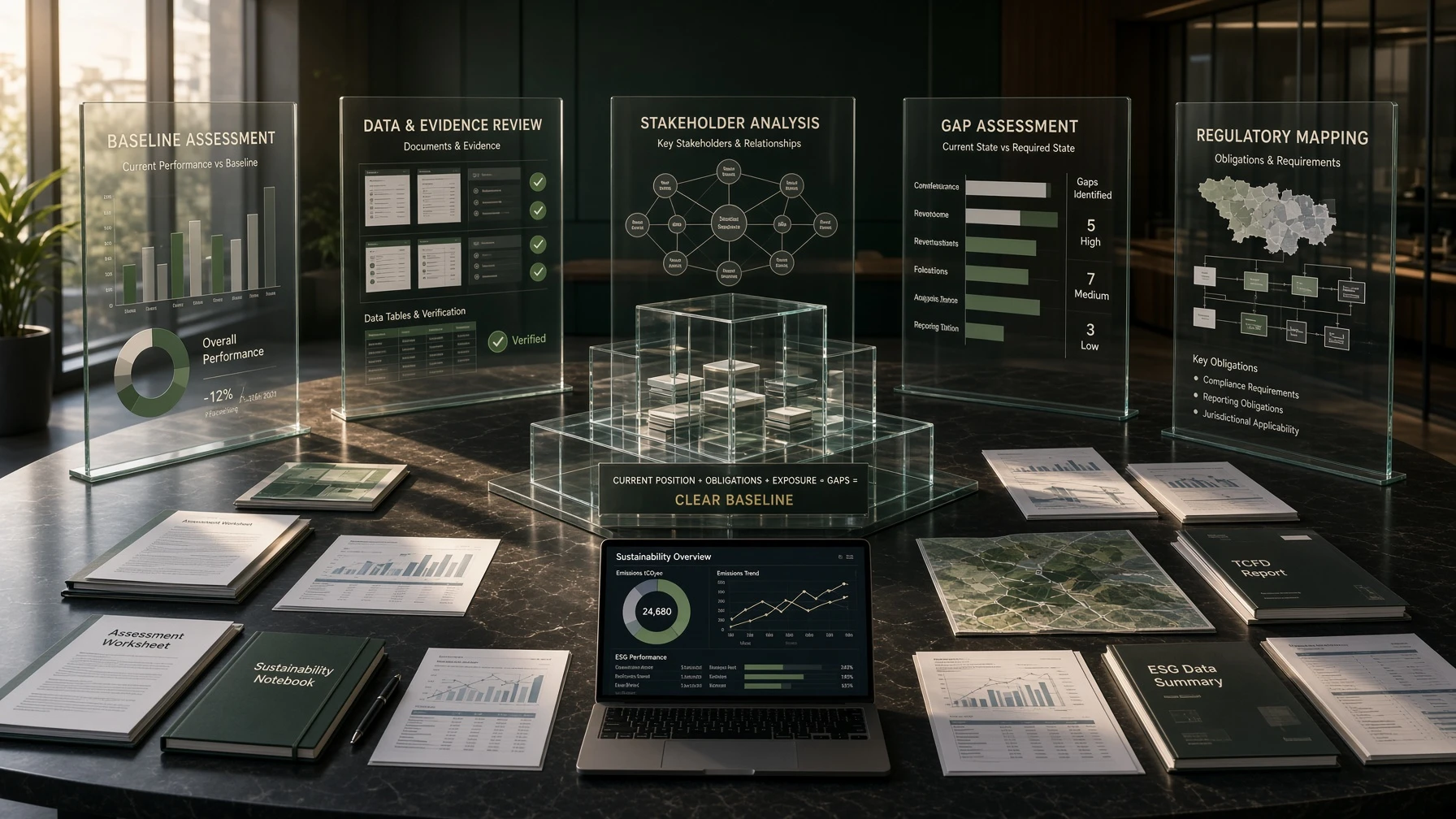
Establish where the organisation actually stands: current position, obligations, exposure and the gaps between them.
Decide where effort and investment should go, so the programme addresses what is material rather than everything at once.
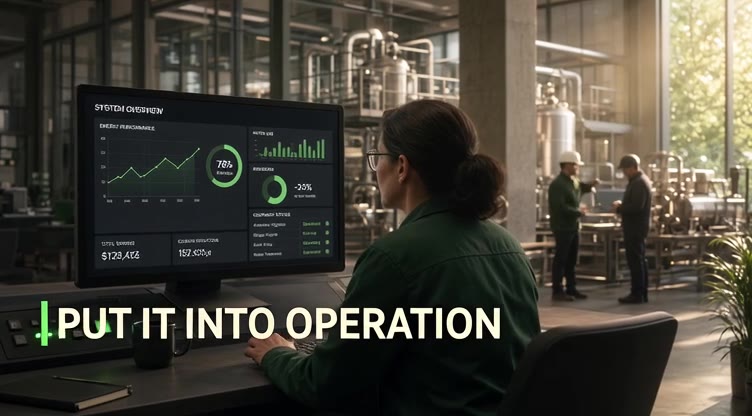
Put the programme into operation, measure it, and build the internal capability to keep it running.
// How we work
These are commitments about conduct rather than claims about quality. They are testable, which is the point.
Some requirements are met with a straightforward internal fix. Where that is the case we say so, because the alternative is selling work that does not need doing.
Preparing an inventory and independently verifying it are separate roles, and no adviser should hold both. We prepare organisations for verification and assurance, and support them through it, the assurance provider is separately appointed.
That applies to our own site as much as to client reporting. Where a number is not verified, it is not published.
A reporting process that only one person can run is a liability. Engagements include documentation and handover so the work can be repeated without us.
Every service page lists the actual deliverables. If something is not on that list, it is not in scope until it is agreed.
Case studies are published only with approval. Client documents are held under access control, never on a public URL.
// Where we work
CER operates from Singapore and works with organisations across Asia. That matters practically rather than decoratively: requirements arriving from European regulators, from regional supervisors and from local listing rules do not align, and an organisation in this region is usually managing all three.
CER does not maintain offices in every country where it works, and does not claim to. Where an engagement requires local presence, that is arranged through the project and stated plainly.
Tell us what is being asked of your organisation. We will tell you what answering it involves, including where the answer is simpler than you expect.
We use necessary cookies to make this site work. We would also like to set analytics cookies to understand how the site is used. Nothing beyond the necessary cookies is set without your agreement. Read the cookie policy.