

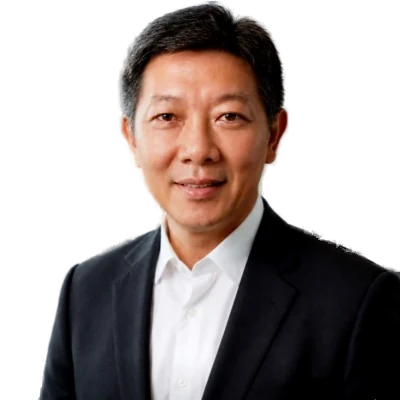
Chan Ee Chong
Lead Consultant
Over twenty years in wealth management and business consultancy, with ESG project experience across South-East Asia.
ESG advisory · Wealth management · Business consultancy
View Chan Ee Chong’s profile// Sustainable & Green Finance
Structure sustainable financing on terms that hold up to investor, lender and supervisory scrutiny.
Framework development, use-of-proceeds definition, sustainability performance targets and reporting for green, sustainability-linked and transition financing.
// Context
Sustainable finance instruments have converged on a small number of structural questions: what the proceeds are used for, how eligibility is determined, how performance is measured, and who verifies it.
The scrutiny applied to those answers has increased. Investors and lenders now examine whether sustainability performance targets are genuinely ambitious relative to a business-as-usual trajectory, and whether the reporting behind them is capable of being verified.
A framework that cannot answer those questions creates exposure in both directions -- for the issuer or borrower whose claims are challenged, and for the institution that financed on the strength of them.
// The engagement
// Deliverables
// Fit
// Why CER
CER works from Singapore with organisations across Asia, which matters for this service because requirements arriving from European regulators, regional supervisors and local listing rules do not align neatly.
Engagements run through to implementation: the data collection process, the documentation, the controls and the internal handover, so that the second cycle is cheaper than the first and can be run without us.
Where an organisation would be better served by building the capability internally, CER Academy delivers the same technical material as training.
Meet the people behind the work// Our people
Lead Consultant
Over twenty years in wealth management and business consultancy, with ESG project experience across South-East Asia.
ESG advisory · Wealth management · Business consultancy
View Chan Ee Chong’s profile
Advisor & Lead Trainer
Over twenty years in actuarial science and risk management, working across ESG, sustainability and ESG investment.
Actuarial science · Risk management · ESG and sustainability
View Raymond Cheung’s profile// Questions
Green instruments are defined by use of proceeds -- funds are applied to eligible projects. Sustainability-linked instruments are defined by performance -- proceeds are general purpose, and pricing is tied to whether the borrower meets agreed sustainability performance targets.
It should be material to the business, measurable on a defined methodology, and genuinely more demanding than the trajectory the organisation was already on. Targets that would have been met without the financing attract the most criticism.
It is not universally required but it is widely expected in public markets, and increasingly requested in private ones. We prepare the framework so that external review is straightforward.
Financing directed at decarbonising activities in sectors that cannot yet be classified as green. It attracts particular scrutiny over whether the transition plan behind it is credible, which is why the underlying decarbonisation pathway matters as much as the instrument.
// Related
Physical and transition risk assessment, scenario analysis and integration into credit, investment and enterprise risk processes.
Climate Risk: Explore this serviceFinanced emissions measurement following the PCAF Global GHG Accounting and Reporting Standard, with asset class coverage, data quality scoring and attribution.
Financed Emissions & PCAF: Explore this serviceReduction levers assessed against cost, feasibility and impact, sequenced into a roadmap with owners, capital requirements and interim targets.
Decarbonisation & Net-Zero Strategy: Explore this serviceReporting built on defined data, documented process and a clear view of which framework applies -- prepared so that assurance is achievable when it becomes required.
Sustainability Reporting: Explore this service// Sectors
Climate risk, financed emissions, ESG governance and sustainable finance.
Financial Services: View sector expertiseTell us where you are now and what you are being asked for. We will tell you what closing that gap actually involves.
Building this capability internally instead? CER Academy delivers the same technical material as training.
We use necessary cookies to make this site work. We would also like to set analytics cookies to understand how the site is used. Nothing beyond the necessary cookies is set without your agreement. Read the cookie policy.