


Raymond Cheung
Advisor & Lead Trainer
Over twenty years in actuarial science and risk management, working across ESG, sustainability and ESG investment.
Actuarial science · Risk management · ESG and sustainability
View Raymond Cheung’s profile// ESG & Sustainability
Produce a sustainability report that meets your obligations and survives scrutiny.
Reporting built on defined data, documented process and a clear view of which framework applies -- prepared so that assurance is achievable when it becomes required.
// Context
Sustainability reporting in Singapore has moved onto a mandatory footing. All SGX-listed companies report Scope 1 and 2 greenhouse gas emissions from FY2025, with broader climate reporting requirements phased in for other groups on later timelines, and large non-listed companies brought in from 2030.
Because those timelines have been revised more than once, the practical question for most organisations is not only what to report but when their particular obligation begins -- which depends on listing status, index membership, market capitalisation, revenue and assets.
The harder problem is usually internal. Reporting requires data with definitions, owners and a control trail. Where that does not exist, the report becomes an annual reconstruction rather than an output of a process.
// The engagement
// Deliverables
// Fit
// Why CER
CER works from Singapore with organisations across Asia, which matters for this service because requirements arriving from European regulators, regional supervisors and local listing rules do not align neatly.
Engagements run through to implementation: the data collection process, the documentation, the controls and the internal handover, so that the second cycle is cheaper than the first and can be run without us.
Where an organisation would be better served by building the capability internally, CER Academy delivers the same technical material as training.
Meet the people behind the work// Our people
Advisor & Lead Trainer
Over twenty years in actuarial science and risk management, working across ESG, sustainability and ESG investment.
Actuarial science · Risk management · ESG and sustainability
View Raymond Cheung’s profile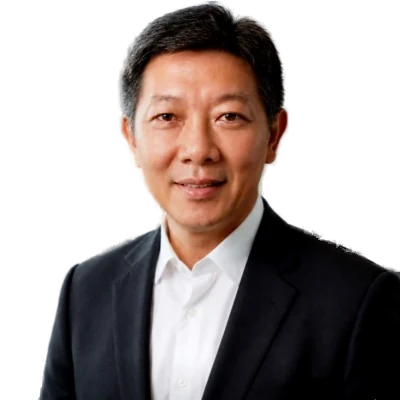
Lead Consultant
Over twenty years in wealth management and business consultancy, with ESG project experience across South-East Asia.
ESG advisory · Wealth management · Business consultancy
View Chan Ee Chong’s profile// Questions
It depends on your listing status and size. SGX-listed companies report Scope 1 and 2 emissions from FY2025. Further ISSB-based requirements are phased by index membership and market capitalisation, and large non-listed companies meeting the revenue and asset thresholds begin later. Because ACRA and SGX RegCo have revised these timelines, we confirm the current position for your entity at the start of an engagement rather than working from a published summary.
For climate disclosure in Singapore the direction of travel is ISSB-aligned. Beyond climate, framework choice depends on who is asking -- investors, customers and regulators do not all want the same thing. We establish that before drafting.
Limited assurance on Scope 1 and 2 data is being phased in, with deadlines that have been extended for some groups. The practical implication is that the data you report now should be built to withstand assurance later, because retrofitting an evidence trail is considerably harder.
We draft disclosures and support production, but the report is the organisation's statement and has to be owned internally. Where a report is written entirely externally it tends not to match what the business actually does.
Then that is the finding, and it is better established before a filing deadline than after one. Data gaps are addressed through defined improvement actions and, where necessary, disclosed.
// Related
A defined ESG position built from material issues, business strategy and stakeholder requirements -- with governance, priorities and a delivery plan attached.
ESG Strategy: Explore this serviceMetric definitions, data ownership, collection processes and controls that turn scattered ESG information into a reportable, auditable data set.
ESG Data & KPIs: Explore this serviceA pre-assurance review of data, evidence and controls against what a provider will test, with the gaps closed before the engagement begins.
Assurance Readiness: Explore this serviceA defensible greenhouse gas number, built on a documented boundary, traceable data and a methodology that stays consistent between reporting years.
Carbon Accounting: Explore this service// Sectors
Climate risk, financed emissions, ESG governance and sustainable finance.
Financial Services: View sector expertiseCarbon measurement, Scope 3, supply-chain requirements and sustainable procurement.
Manufacturing & Supply Chain: View sector expertise// Insights
Singapore's climate reporting requirements are phased by listing status, index membership and size -- and the timelines have been revised. Here is how to work out where your organisation sits.
3 min read
Singapore climate reporting: what applies to your company, and when: Read articleOrganisations preparing for their first sustainability assurance engagement usually assume the risk is in the calculation. It is almost always in the evidence trail.
2 min read
What assurance providers actually test, and why your number is not the problem: Read articleTell us where you are now and what you are being asked for. We will tell you what closing that gap actually involves.
Building this capability internally instead? CER Academy delivers the same technical material as training.
We use necessary cookies to make this site work. We would also like to set analytics cookies to understand how the site is used. Nothing beyond the necessary cookies is set without your agreement. Read the cookie policy.