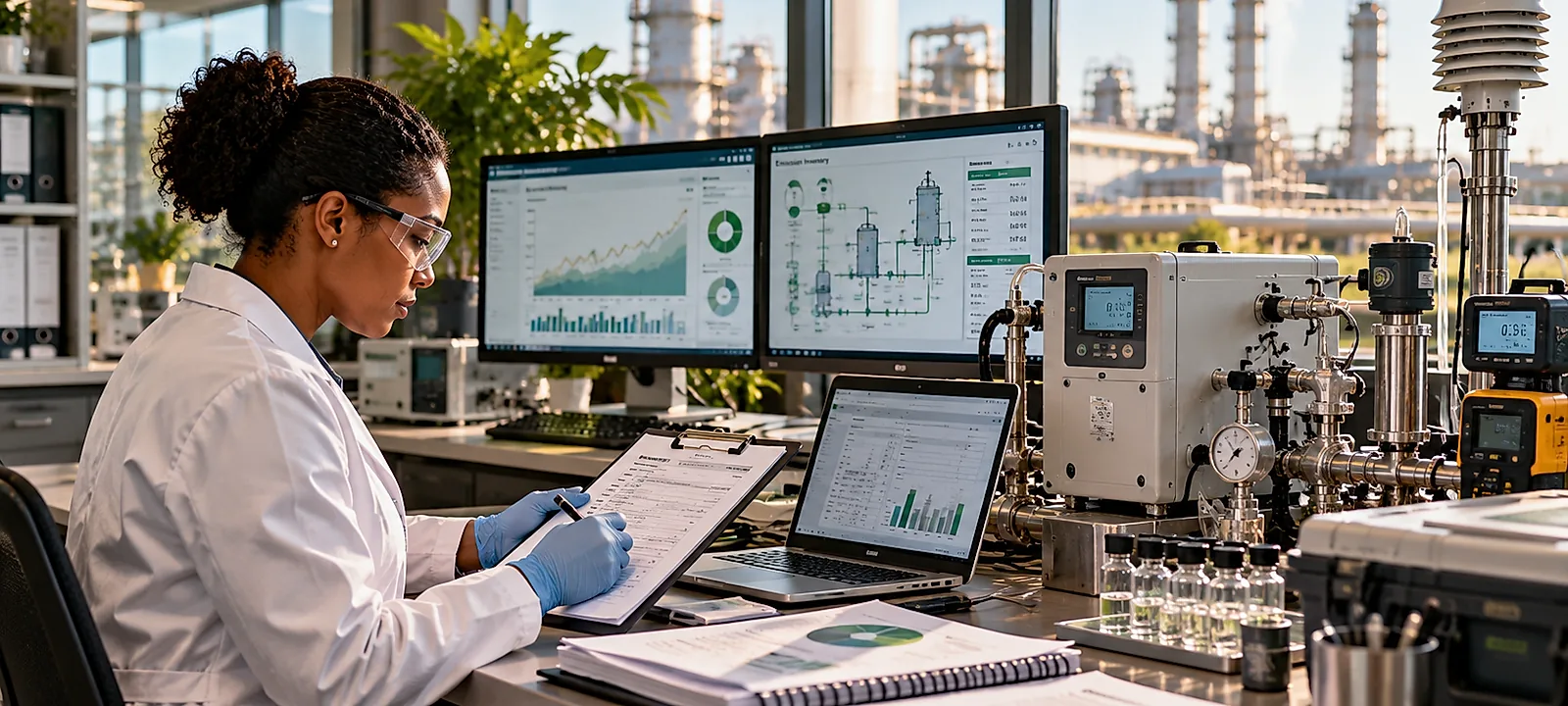

Carbon Accounting
A defensible greenhouse gas number, built on a documented boundary, traceable data and a methodology that stays consistent between reporting years.
Carbon Accounting: Explore this service// Industries
Technology businesses carry a footprint concentrated in purchased electricity and hardware supply chains, and face ESG questions increasingly written into enterprise procurement.
Data centre and cloud emissions, purchased energy, supply-chain hardware and customer ESG requirements.
// Context
For most technology organisations the largest emissions sources are purchased electricity -- particularly where computing is significant -- and the upstream manufacture of hardware. Neither is fully within the organisation's direct control.
Enterprise customers now ask about both. ESG requirements appear in security questionnaires, procurement due diligence and contract terms, and the answers are increasingly checked rather than filed.
Because the footprint is concentrated, the analysis is often narrow but the data work is precise: market-based Scope 2 treatment, renewable energy instruments, and hardware lifecycle assumptions all materially change the reported result.
// Priorities
// Solutions
A defensible greenhouse gas number, built on a documented boundary, traceable data and a methodology that stays consistent between reporting years.
Carbon Accounting: Explore this serviceComplete Scope 1 and 2 measurement, and a Scope 3 programme that starts with screening and prioritisation rather than attempting fifteen categories at once.
Scope 1, 2 & 3 Emissions: Explore this serviceMetric definitions, data ownership, collection processes and controls that turn scattered ESG information into a reportable, auditable data set.
ESG Data & KPIs: Explore this serviceA defined ESG position built from material issues, business strategy and stakeholder requirements -- with governance, priorities and a delivery plan attached.
ESG Strategy: Explore this serviceReporting built on defined data, documented process and a clear view of which framework applies -- prepared so that assurance is achievable when it becomes required.
Sustainability Reporting: Explore this service// CER Academy
Understand what ESG requires of your organisation and where responsibility for it sits.
Dates confirmed on enquiry
ESG Essentials: A Strategic Overview: View courseRead, question and contribute to a greenhouse gas inventory with confidence.
Dates confirmed on enquiry
Carbon Literacy for Professionals: Measurement to Mitigation: View courseTell us what is being asked of your organisation and by whom. We will tell you what answering it involves.
We use necessary cookies to make this site work. We would also like to set analytics cookies to understand how the site is used. Nothing beyond the necessary cookies is set without your agreement. Read the cookie policy.